Transforming London’s Iconic Spaces into Luxury Events
The design decisions, hidden constraints, and creative opportunities that come with producing luxury events in London's most celebrated cultural institutions
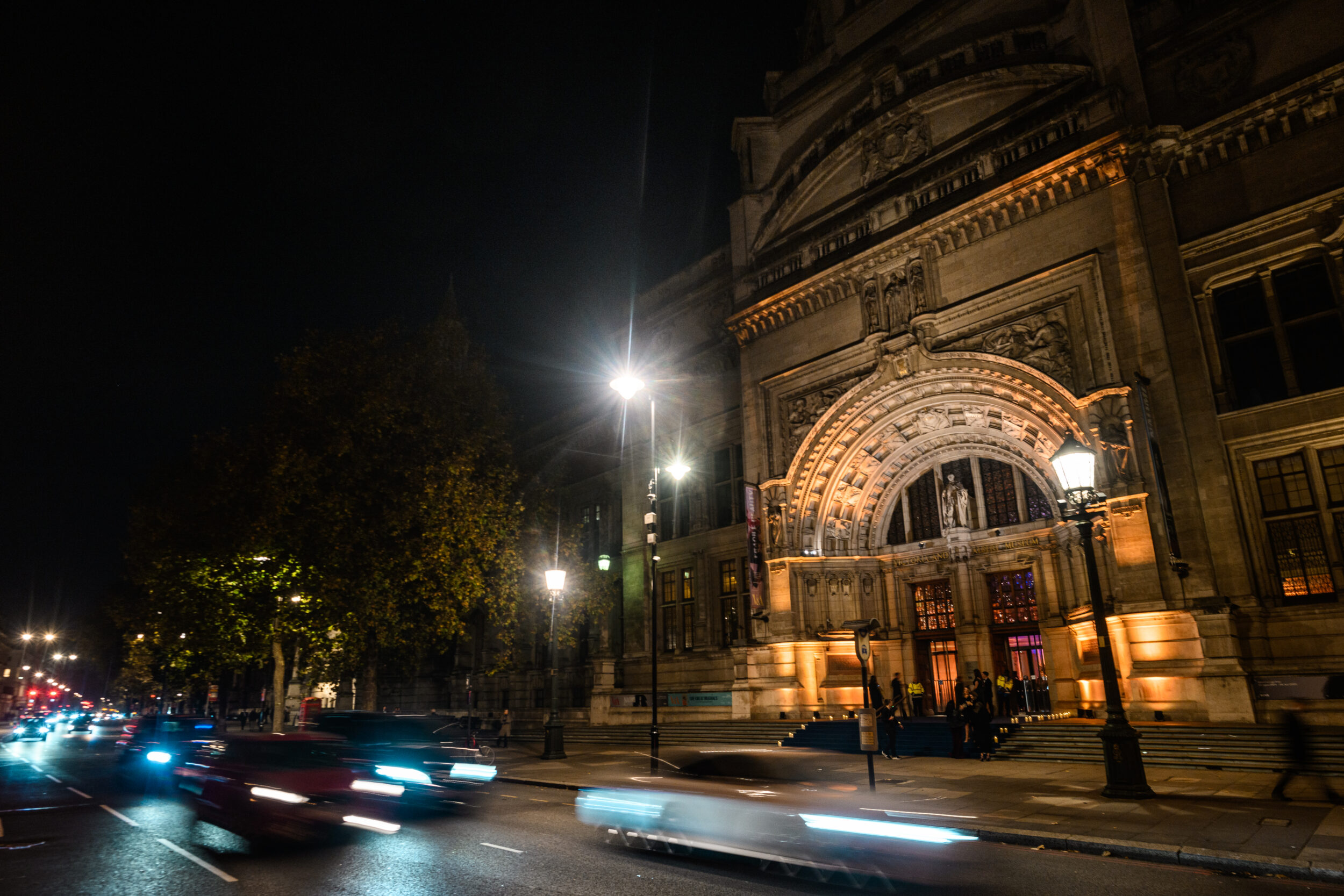
There is a particular kind of pressure that comes with working inside a building that was standing long before you were born – not a weight exactly, more a responsibility. When the V&A’s terracotta corridors or the Natural History Museum’s Romanesque arches become the backdrop for an evening your client has spent months anticipating, every decision sits in conversation with something far bigger than the event brief.
London’s cultural institutions are among the most sought after venues in the world – for good reason. They carry a prestige that no purpose built space can replicate, offering guests the rare sensation of being inside history. They are also complex environments to work in. Understanding that complexity, what it demands and what it enables, is what separates a good event from a genuinely memorable one.
Having produced events across these properties, we know the real work starts long before the guest list is confirmed. It starts with learning the building – let’s explore how our team does that.
The V&A, Artistry as Architecture
The Victoria and Albert Museum in South Kensington is a world of creativity in the heart of London. Its 5,000 year collection spans 145 galleries, and the building itself is as much an exhibit as anything inside it.
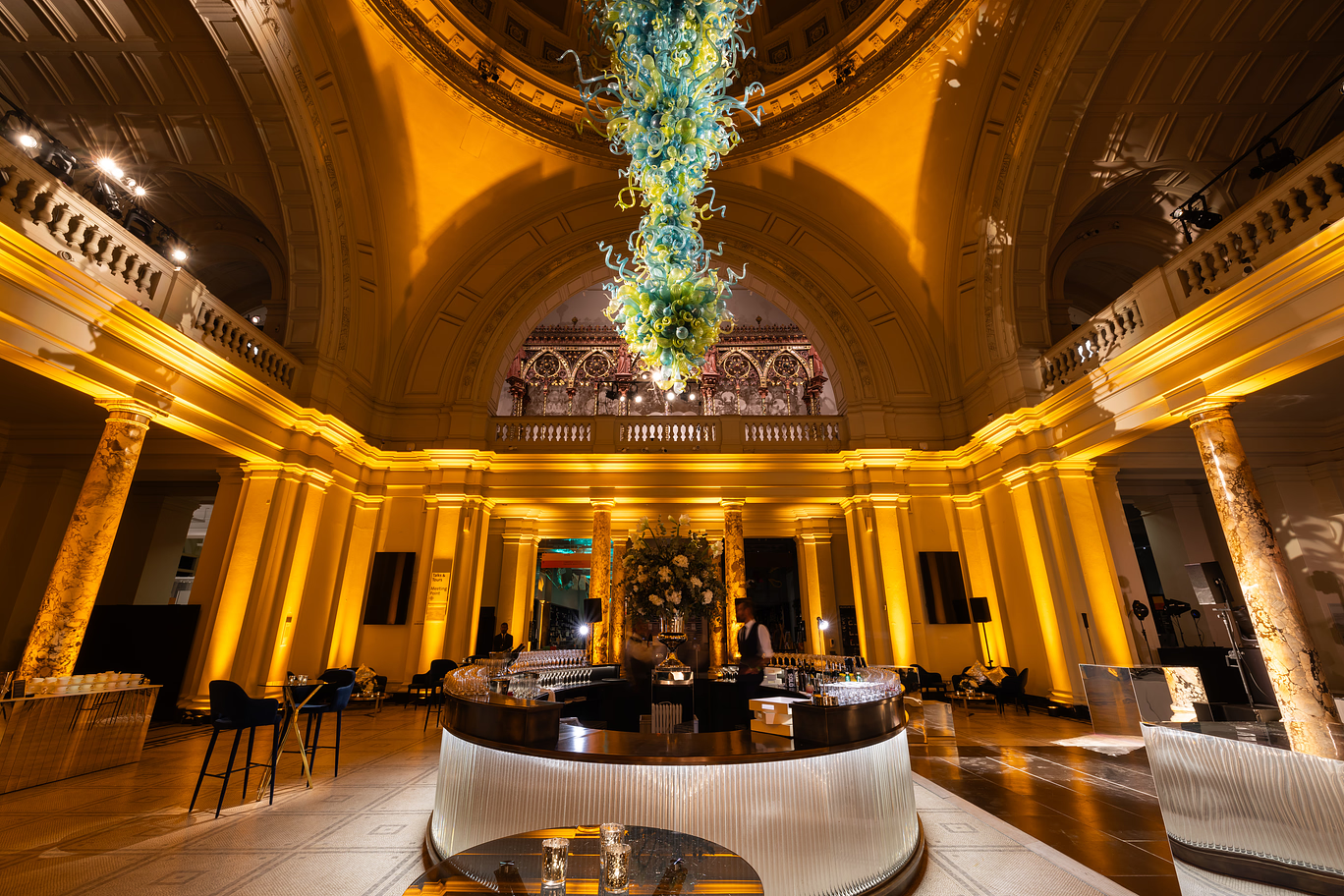
For events, the spaces offer distinct characters. The Dome, with its marble columns and Chihuly chandelier, holds up to 600 standing or 250 for dinner and creates an immediate sense of occasion. The Raphael Gallery, cathedral sized and lined with the Raphael Cartoons, accommodates up to 400 for dinner in a more hushed, monumental setting. The John Madejski Garden, hidden from the street and beautifully lit after dark, holds up to 600 for summer receptions.
The creative opportunity is considerable. Almost any theme can find a natural anchor within the collection, and private views of major exhibitions offer genuinely rare access for guests.
The constraints are equally real. This is a public institution, suppliers must be approved, setup begins only after closing, typically around 5:45pm, and the venue operates on a dry hire basis. For experienced producers these are navigable, for the unprepared they create risk.
The most successful events work with the building rather than over it. The V&A is not a blank canvas, and that is its strength.
The Royal Academy of Arts, Prestige on Piccadilly
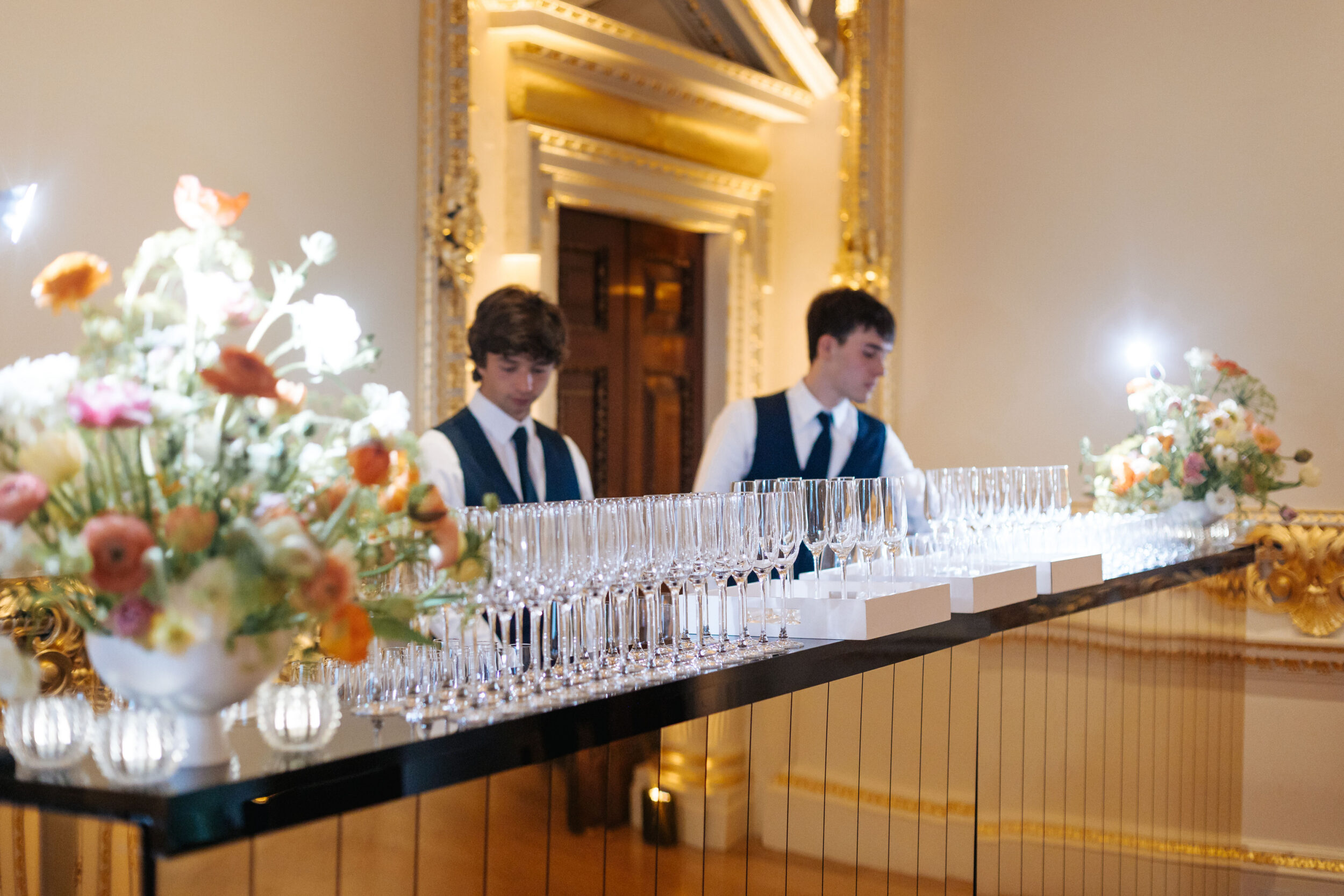
The Royal Academy of Arts at Burlington House has been central to London’s cultural life for centuries. Its Piccadilly address carries an authority that shapes the tone of any event held there.
Key spaces include the Main Galleries, which hold up to 800 standing or 250 seated during the Summer Exhibition. The Collection Gallery offers a rich backdrop for breakfasts and evening events, while the Keeper’s House provides more intimate settings.
For corporate clients, the RA signals cultural awareness and quality. Summer events, combined with exclusive exhibition access, are particularly effective. Production requires careful planning – there is no outdoor space, guest flow across connected buildings must be mapped, and supplier frameworks are strict. The collection remains central – this is not a neutral venue.
The creative opportunity, especially during the Summer Exhibition, is exceptional. The key is restraint, when the space is already extraordinary, the design should simply frame it.
Somerset House, Flexibility in a Landmark Setting
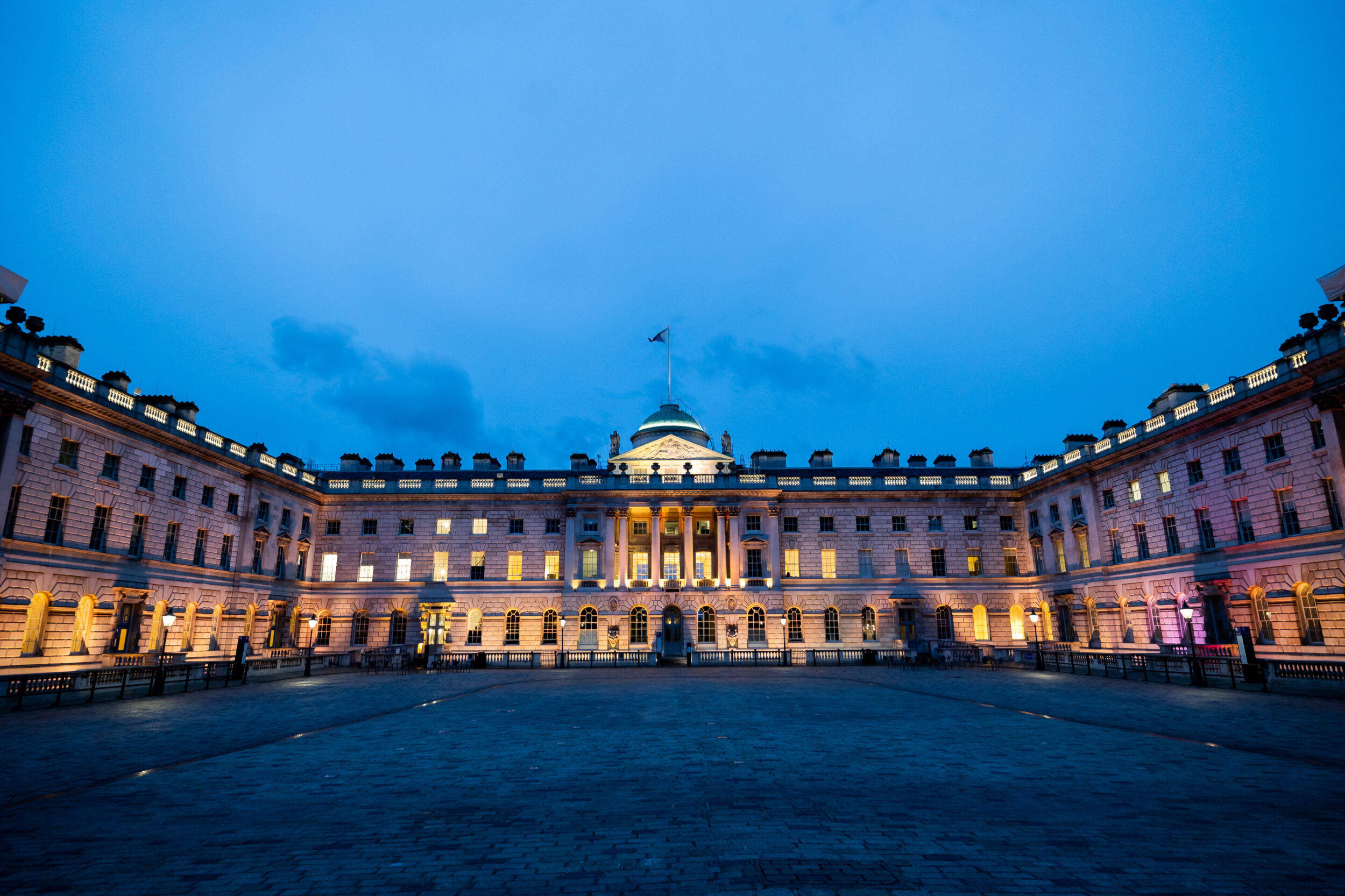
Somerset House occupies a unique position on the Strand, between the Thames and Covent Garden. Its Grade I listed neoclassical structure offers twelve spaces, from intimate rooms to the vast Edmond J Safra Fountain Court.
The Fountain Court, accommodating up to 1,500 standing or 550 seated, is the centrepiece. In summer it is expansive and open, in winter it becomes atmospheric and theatrical. The River Terrace provides a strong outdoor option for up to 500 standing, with the Seamen’s Hall offering an elegant indoor alternative. The Navy Board Rooms suit smaller gatherings, while the Lightwells and Deadhouse offer something more unusual.
As a dry hire venue, costs for catering and production add up quickly. What Somerset House offers in return is flexibility, scale, and the ability to create multi-space experiences, supported by access to its cultural programming.
The primary challenge is scale. The courtyard must be filled appropriately, and multi room events require careful planning to create flow and discovery.
The Natural History Museum, Theatre Without Parallel
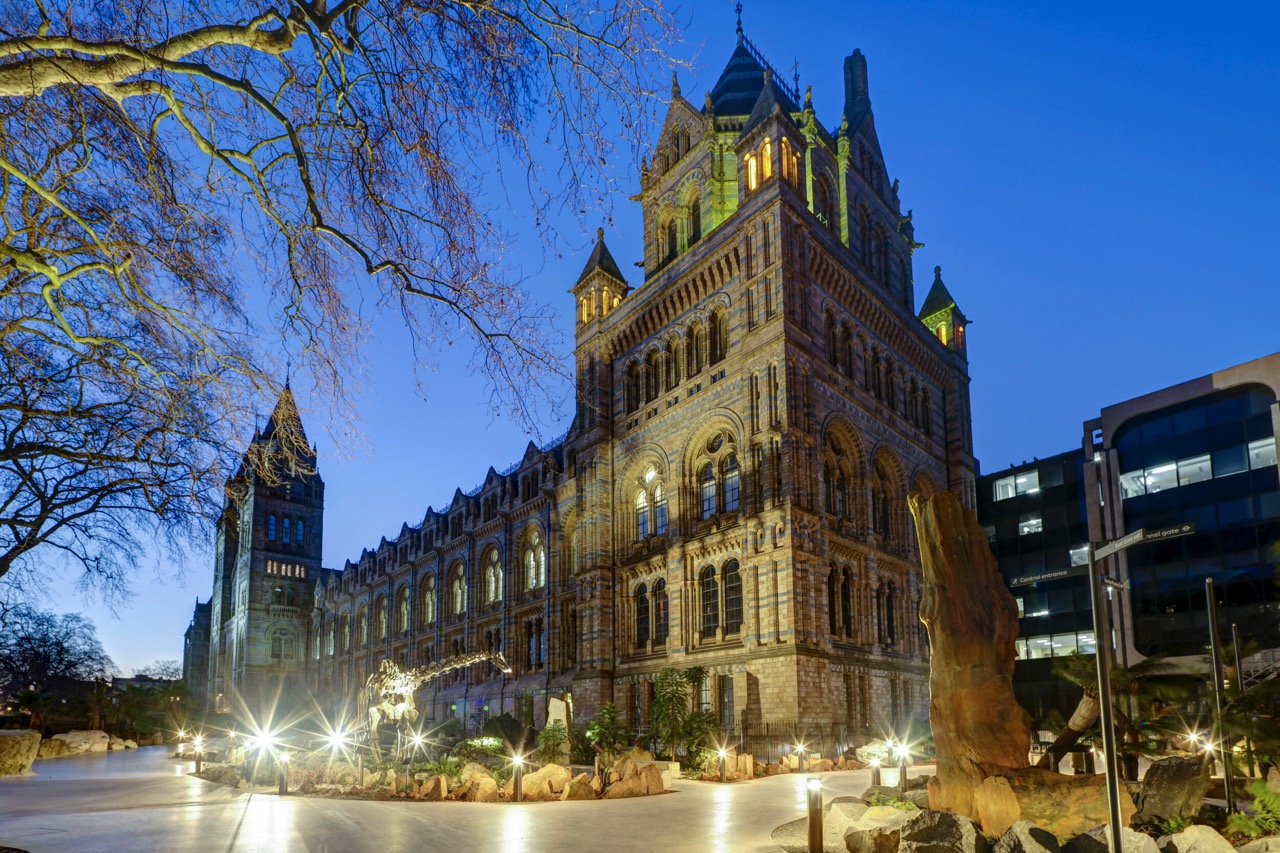
The Natural History Museum delivers one of the most dramatic event settings in the city. Hintze Hall, with its Romanesque arches and suspended blue whale skeleton, creates an arrival moment that is unmatched.
Hintze Hall holds up to 1,200 standing or 650 for dinner, with adjacent spaces supporting receptions and dancing. The Earth Hall offers a different atmosphere for up to 200 guests, while the Darwin Centre provides a more contemporary option.
This is the venue for scale and spectacle. Gala dinners, award ceremonies, and major launches benefit from its impact.
As with other institutions, it operates on a dry hire basis with approved suppliers, and production windows are tight, with guest arrival typically from 7pm. The scale of the space also presents a common challenge, over production. The architecture and exhibits provide more than enough visual impact.
What These Venues Have in Common
Despite their differences, these venues share certain realities.
All require approved suppliers, strict adherence to conservation and security, and careful planning. None can be treated as a neutral backdrop.
Events must work in dialogue with the building. We see this as an opportunity rather than a limitation: the best results come from producers who understand the venues, their logistics, and their nuances.
Timing is also critical. As public institutions, they close in the early evening, compressing production windows. What might take six hours elsewhere often needs to be delivered in three and a half.
Planning a Luxury Event in an Iconic London Venue
London’s cultural institutions offer some of the most powerful event experiences available. They also demand a level of preparation and expertise beyond most venues.
When executed well, the results are exceptional, events remembered not just for what happened, but for where they happened.
At Word on the Street, we produce events across London’s most prestigious venues, from corporate receptions to large scale celebrations. If you are exploring what is possible, we would love to talk.