The Art of Al Fresco: A Masterclass in Weatherproofing London’s Most Elegant Outdoor Soirees
London weather: a struggle we’ve all had to cope with. But as the storms of this winter and the intensifying heatwaves which are following have shown, preparation is the only way to deal with it.
The 2026 reality is that London’s climate has become less predictable, not more. As planners for outdoor corporate events in London and beyond, we have to prepare for 30 degree sunshine alongside spring and summer downpours that arrive without warning. Both demand a response, and this response should not be visible to guests.
This is what genuine weatherproofing looks like: design principle rather than panicked changes.
The Invisible Plan B
The worst version of weather contingency is the one guests can see. Leaving guests running for cover as a white PVC marquee wheeled in at short notice is never a good look. Incidents like this communicate one thing clearly: nobody planned for this.
Leaving guests with a well-rounded, relaxed impression of events is paramount. That comes in the details, think:
– Clear-span tensile canopies with glass walls
– Architectural pergola systems with automated louvred roofs that respond to rainfall in real time
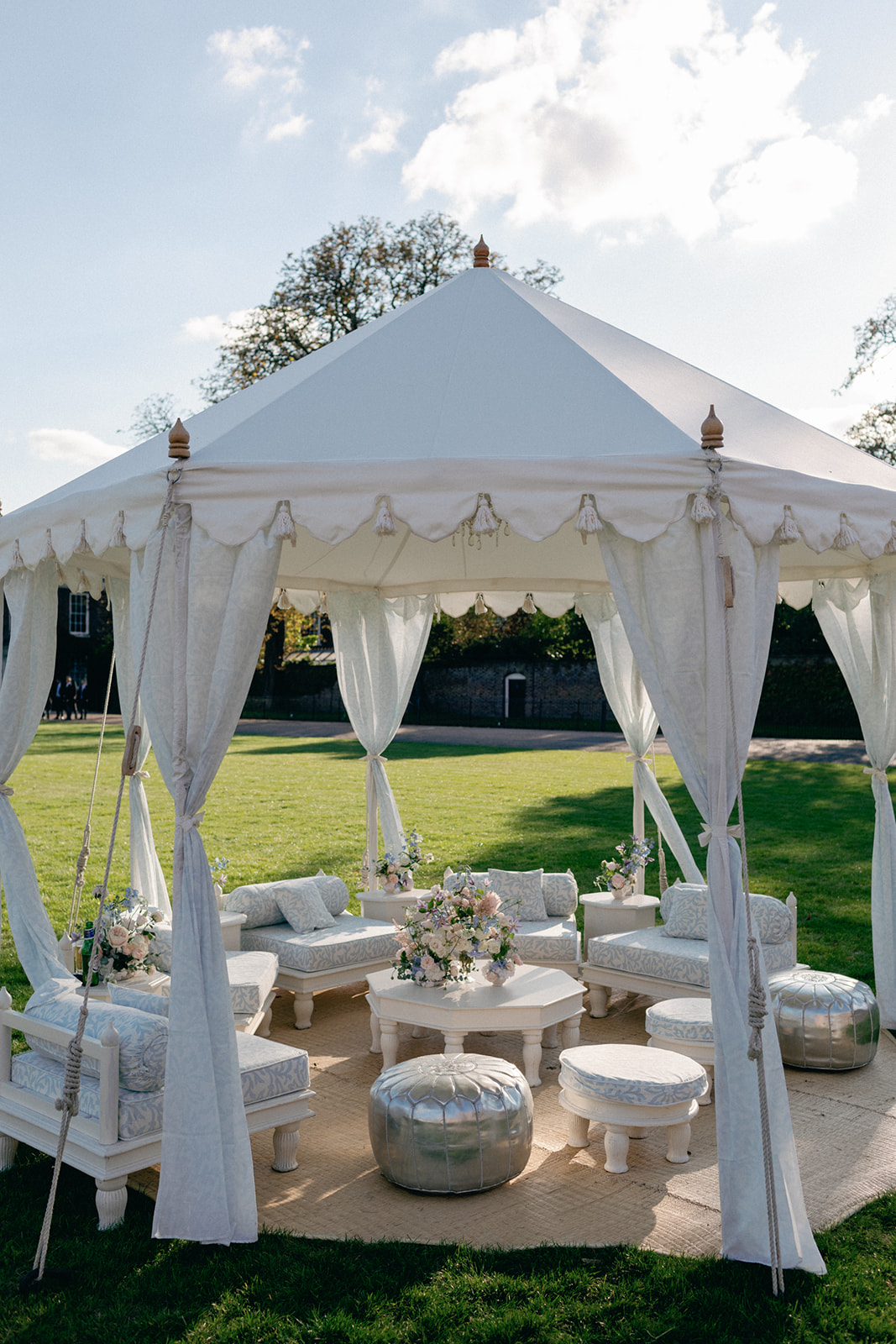
– Bespoke timber structures offering aesthetic class and practical cover for guests
The key distinction is this: the best Plan B does not look like a plan B – it looks like it was always plan A. On a practical level, this also means making the structural decision early. The structures that perform beautifully require planning permission in certain venues, specialist rigging, and load assessments. They cannot be confirmed the week before.
Weather contingency, especially for outdoor corporate events in London, begins at the briefing stage – having event planners with extensive location knowledge and a deep contact book is invaluable. That’s where our Team at Word on the Street comes in.
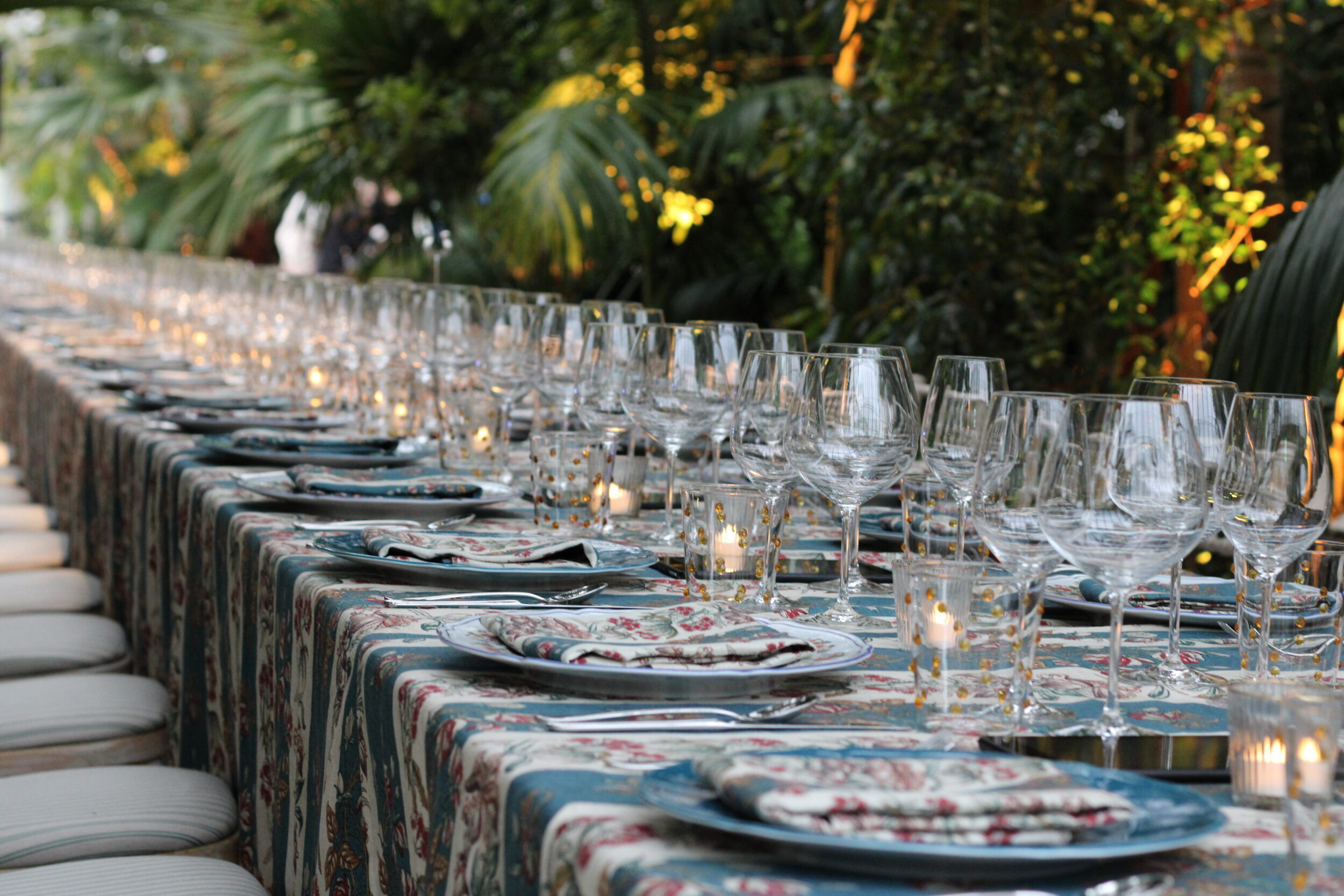
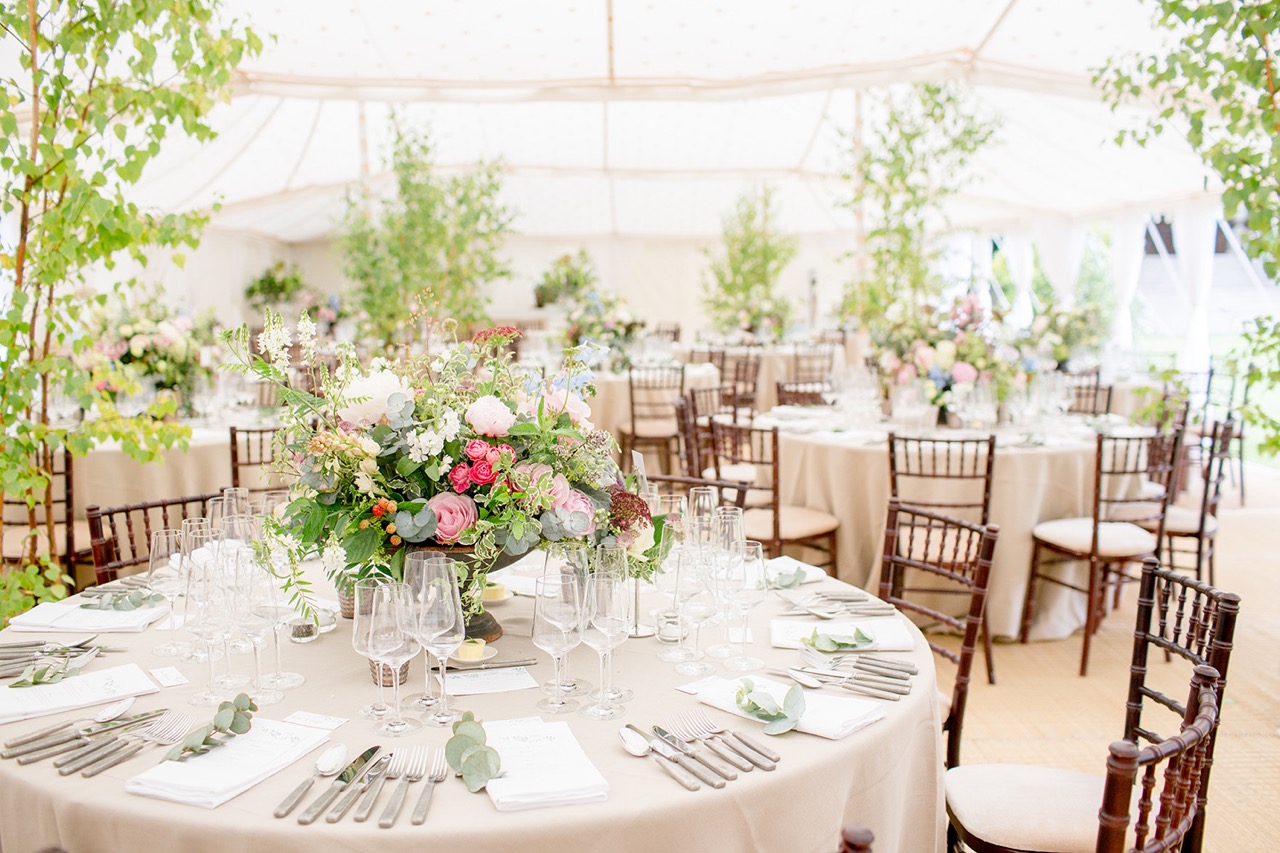
The Technology of Guest Comfort
For warmth, radiant infrared heating panels can be integrated into canopy structures or pergola systems and concealed almost entirely within the architecture of the space. They operate silently, heat directionally, and produce no visible flame or industrial-looking element. Guests feel warm rather than watched and managed.
For heat, the mission has shifted. Evaporative cooling systems, discreet pedestal units with a designed housing, and the intelligent use of shade and airflow all reduce ambient temperature meaningfully. The instinct to add more people to a rooftop in mid-summer needs to be balanced against what that space actually does to guest comfort when the heat builds.
What Guest-Proofing Actually Means
Weather is one variable, guests are another. The interaction between them is where most outdoor events quietly underperform.
Grass lawns are a good example. They look exceptional in the brief: they feel like summer.
But a few showers beforehand, the ground softens and heels sink. Guests stop moving, self-consciously. The energy of the event contracts around the edges where people feel uncomfortable navigating the surface.
The solution is neither to avoid lawns nor to lay down the kind of event flooring that looks like it belongs in a conference hall. Specialist grass-surface matting exists that is designed to be invisible — it holds beneath the lawn, stabilises the ground, and allows grass to grow through it. Guests walk freely, the lawn looks exactly as it should and nothing announces itself.
The same logic extends across every guest-facing detail:
– Sun protection that feels spa-grade, not an afterthought. A curated SPF station: quality products, proper signage, a moment of self-care built into the guest journey, communicates awareness of the environment without making guests feel the event is fighting it
– Hydration presented as hospitality. Infused water stations, chilled linen-wrapped flasks, a drinks strategy that accounts for heat without making the event feel like a health and safety response
– Lighting that transitions intelligently. As the evening cools, the quality of light should deepen rather than simply brighten. Warm-toned, layered, designed to carry the event into a different register without announcing the shift.
Guest-proofing is all about anticipating the physical reality of spending several hours outdoors in an unpredictable climate, and designing the experience so that reality is absorbed invisibly into the event.

The Venues That Make This Possible
intervention. Some have restrictions on structural builds, load limits, or noise levels that make genuine weatherproofing difficult. Others have been designed, at some level, with London’s climate already in mind – covered colonnade routes, semi-enclosed terraces, garden spaces with existing shelter that can be enhanced rather than created from scratch.
Knowing which venues fall into which category is the product of having been in them, at this time of year, in these conditions. It is not information that venue websites carry. It requires the kind of ongoing relationship with spaces that only comes from working in them regularly – explore our venue finding services to gain an insight into how we do it.
When we shortlist outdoor corporate events in London for summer briefs, the weatherproofing potential of a space is assessed alongside its orientation, its structural permissions, and its behaviour in heat as much as in rain. A terrace that looks perfect in photographs and performs poorly in August heat is not the right starting point, regardless of how appealing the images are.
Planning Your Summer Event
The outdoor corporate events London teams remember not the ones that got lucky with the weather. They are the ones that were planned so well that the weather became irrelevant.
If you are beginning to think about a summer event in London or beyond, and you want the outdoor experience to feel genuinely effortless, for guests, for your team, for everyone in the room, that planning starts now.
At Word on the Street, we plan and produce outdoor corporate events in London that are built around the reality of the environment, not the best-case version of it. Get in touch and we can begin the conversation.